
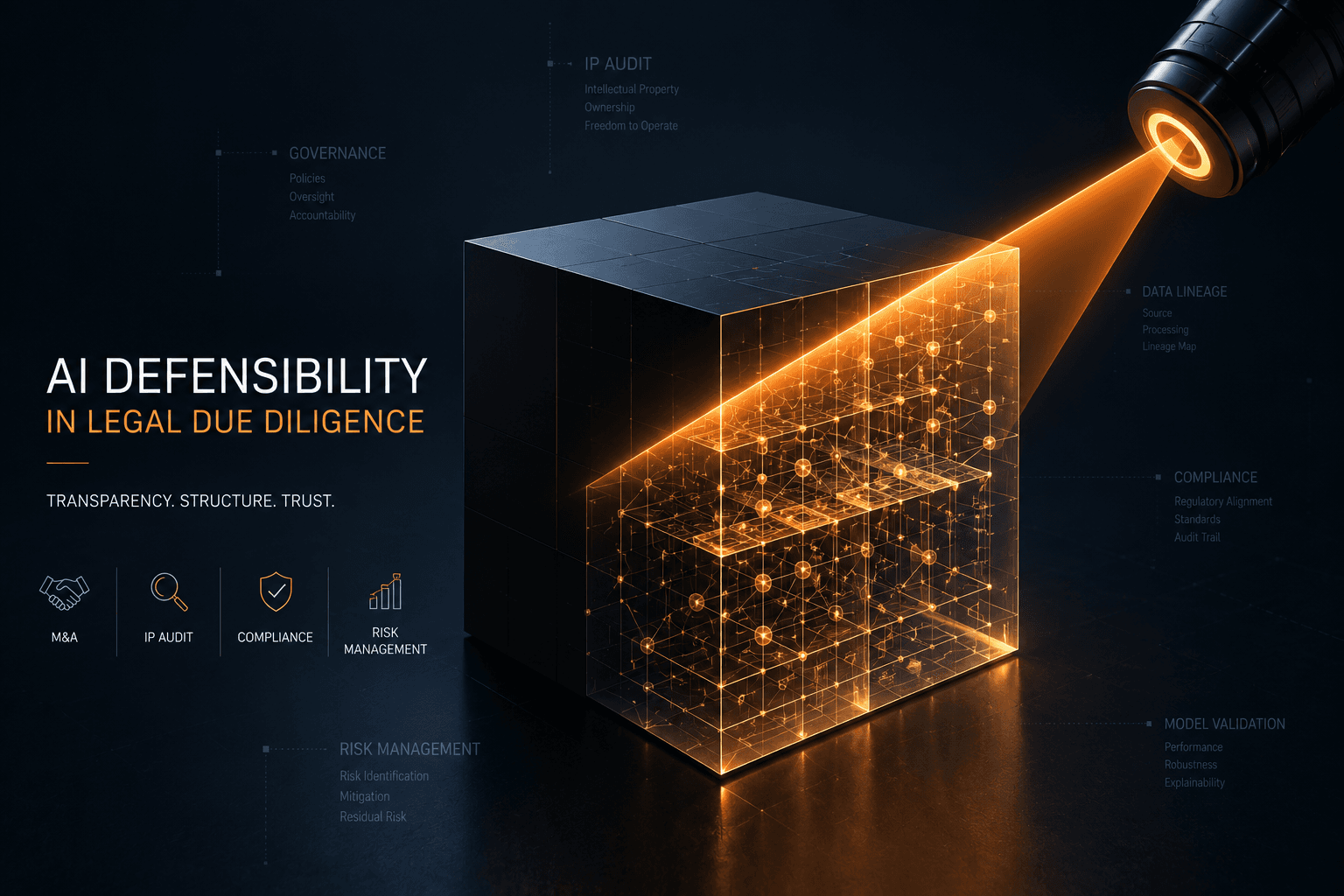
Picture the modern M&A boardroom. A founder is pitching their AI startup, sliding a deck across the table that boasts off-the-charts benchmark scores, massive context windows, and blistering inference speeds. They think they have just justified a billion-dollar valuation.
But the acquiring legal team is not looking at the benchmarks. They are looking at the foundation. They ask a simple question: "Can you prove you actually own the data this learned on?"
The room goes quiet. And just like that, the deal stalls.
The current obsession with AI model rankings is a distraction with excellent marketing. In the real world of corporate transactions, the defining question has shifted. The next phase of tech M&A is not about acquiring a better model. It is about acquiring a defensible architecture.
The End of "Trust Me, It Works"
Historically, tech due diligence was relatively straightforward. Legal teams would review the software licenses, check the open-source libraries, and confirm no one was stealing code. Today, a target company's competitive advantage does not come from the novelty of its algorithms. It comes from how those systems hold up under real-world, legal scrutiny.
Deep learning models are notoriously opaque. In M&A, acquiring an algorithmic black box is a non-starter. You are not just buying a bad product; you are inheriting unquantified legal, regulatory, and ethical liabilities.
Legal teams now require explainability. Whether the AI is designed to analyze complex legal statutes or screen financial risks, the buyer needs to know exactly how the algorithm arrived at a specific output. If an organization cannot produce an audit log proving how and why a model was deployed, its entire system is legally vulnerable. Buying an unexplainable AI is like buying a skyscraper without inspecting the steel: the collapse is only a matter of time.
The Skeletons in the Data Closet
AI models do not just appear out of thin air. They require vast amounts of data and human labor, and due diligence now extends deeply into the messy reality of how those models were built.
When lawyers look at the AI Supply Chain, they are looking for skeletons. Where did the training data come from? Was it scraped from copyrighted websites without permission? What about the human labor used for content moderation? Were workers treated ethically, or does the data rely on exploitative overseas labor practices?
If a target company built its foundation on unethically sourced data, it opens the acquiring entity to severe human rights violations, massive copyright infringement lawsuits, and catastrophic reputational damage.
The Threat Coming from Inside the House
A major new liability in corporate transactions is not just the product being sold. It is how the company's own employees are working. We call this the rise of Shadow AI.
Imagine a target company has a perfectly defensible flagship product. But down the hall, their developers are pasting proprietary code into public, consumer-grade chatbots to find bugs. The sales team is uploading sensitive client data into free AI summarization tools.
This creates an immense risk of IP contamination and privacy leakage. Diligence now requires a forensic look at a company's internal IT guardrails. If a startup does not have strict, enforceable policies preventing employees from feeding the crown jewels into public AI ecosystems, the buyer is inheriting a massive data breach waiting to happen.
Break It Before We Buy It
Acquirers have realized that a controlled, polished demo is not reality. The focus of technical due diligence has shifted from looking at how well a model works to seeing how easily it breaks.
Red-Teaming: Legal and technical teams now demand proof of adversarial stress-testing. Engineers actively try to force the AI to hallucinate, bypass safety guardrails, or spit out toxic content. If a target cannot provide documentation that they have aggressively red-teamed their own product, the model is considered too fragile to buy.
The Economics of Compute: Defensibility is also economic. Buyers are aggressively modeling whether the target's compute costs (like GPU usage and cloud capacity) are actually sustainable at commercial volumes. A model that is legally sound but costs a fortune in compute to run is a dead asset.
How Deals Actually Get Signed Now
Because evaluating the true value and risk of an AI asset is incredibly difficult, law firms are fundamentally redesigning how they structure deals to protect the buyer post-closing.
AI-Specific Indemnities: Standard tech representations no longer cut it. Buyers are negotiating tailored indemnities that hold the seller financially responsible for unauthorized training practices or copyright claims that surface after the deal closes. Essentially, if the buyer gets sued because of bad data scraping, the seller is paying for it.
Performance-Based Earnouts: To bridge the gap between what founders think their AI is worth and what buyers are willing to risk, dealmakers are holding back a portion of the purchase price. The seller only receives the full payout if the AI model hits specific performance metrics post-acquisition and remains free of legal challenges.
Antitrust Scrutiny: Regulators are waking up. They are actively scrutinizing whether AI pricing tools facilitate tacit price-fixing among competitors. If a target's AI uses non-public data to algorithmically align prices, it can trigger severe antitrust investigations.
The Bottom Line for Leaders
The strategic implication deserves to be stated plainly. The days of moving fast and breaking things with AI are over.
Intelligence, in the era we are entering, is not just a property of raw capability. It is a property of governance, coordination, and legal embeddedness. The founders treating auditability and legal compliance as secondary concerns are building on sand. The ones investing in defensible architectures right now are not just deploying AI more efficiently. They are building a moat their competitors will spend years trying to cross.
For anyone delivering news and analysis on the modern tech landscape, the data points in one direction. Those that understand defensibility are building massive leverage at the negotiation table. The ones still obsessing over benchmark scores are just acquiring exposure.