
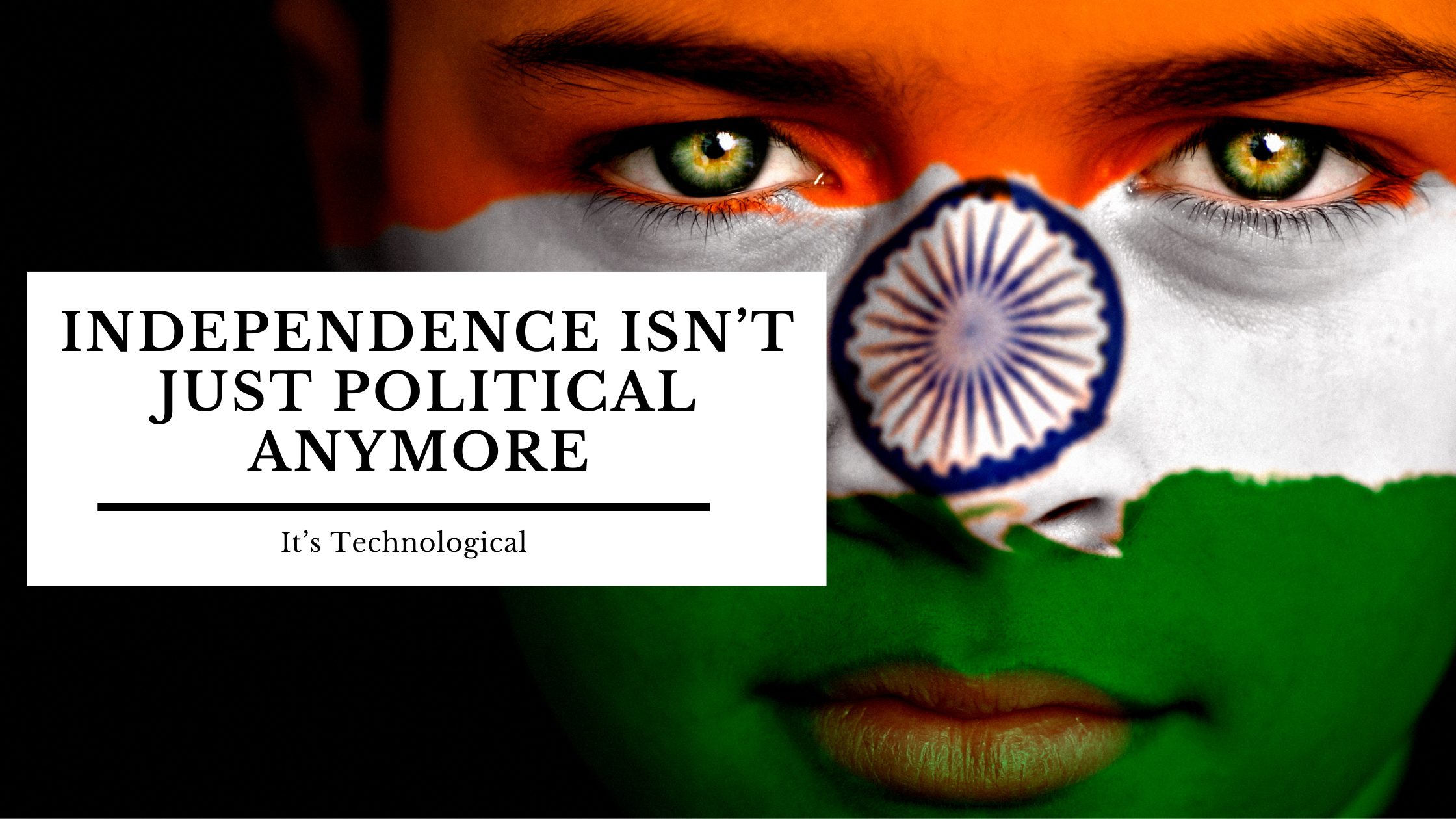
It is easy to look at Republic Day as a ceremony. We see the parade on Kartavya Path, the display of military hardware, and the speeches, and we think of it as a commemoration of the past.
But if you strip away the pageantry, Republic Day celebrates something deeply technical: Structure.
In 1950, we didn’t just declare ourselves free; we installed a source code for the nation. The Constitution was a framework of logic that defined how decisions would be made, how conflicts would be resolved, and where power would reside. It was an assertion that our future would be determined by our own internal logic, not by the whims of an external empire.
That was political sovereignty.
Today, as I look at the landscape of Indian enterprise and governance in 2026—weeks before the India-AI Impact Summit in New Delhi—I see a new tension emerging.
We have political independence. But we are dangerously close to losing our cognitive independence.
The New Colonialism is Invisible
For the last three years, the dominant narrative in boardrooms from Bengaluru to Gurgaon has been "Adopt AI or die."
And so, we adopted. We signed the contracts. We integrated the APIs. We piped our customer data, our legal drafts, and our strategic planning documents into black boxes hosted on servers we will never see, processed by logic we cannot inspect.
We told ourselves this was modernization. But there is a sharp difference between buying tools and renting intelligence.
This is the "Frankenstein Stack" problem I see in 90% of companies today. You have a marketing AI, a coding AI, and a customer support AI—all from different vendors, none talking to each other, and all creating a dangerous dependency.
Consider the implications:
The Black Box Bank: When a fintech uses an external "AI Decision Engine" to determine creditworthiness, and that engine denies a loan based on a vector correlation that the bank’s own risk officer cannot explain—who is actually running the bank?
The Hallucinating Government: When a ministry uses a closed-source LLM to summarize public sentiment on a new bill, and the model skews the summary because its training data is heavily weighted toward Western political discourse—whose democracy is it?
Independence today is the ability to understand, govern, and evolve your own systems.
If the core logic of your organization—the "brain" that assesses risk, spots opportunity, or serves customers—is a rental, you are not sovereign. You are a vassal state in a digital empire.
The Strategic Risk: Organizational "Learning Drain"
We are all familiar with the "Brain Drain" of the 1990s and 2000s. In the AI economy of 2026, the risk is "Learning Drain."
When your employees rely entirely on a massive, generalized external model for their daily tasks, a subtle transfer of value occurs. Every time your junior engineer asks an external AI to fix their code, or your sales rep asks it to draft a pitch, two things happen:
Cognitive Offloading: Your team stops exercising the "muscle" of critical thinking and synthesis. Research shows a direct correlation between heavy AI reliance and a decline in independent problem-solving skills.
Feedback Loss: The "learning"—the correction of the error, the nuance of the pitch—happens inside the vendor's model context, not in your institutional memory.
You are feeding the beast. You are paying a subscription fee to train a model that might one day be sold to your competitor.
True technological independence means capturing that value. It means building an Internal Intelligence Layer where the learnings from your specific context—your market, your laws, your cultural nuances—stay within your walls.
The Architecture of Sovereignty
So, what is the path forward? I am not suggesting we build a "Great Firewall" or try to train our own foundation models from scratch (unless you have ₹1000 crore to burn on GPUs). Isolationism in technology is suicide.
We must use the best global tools available—GPT-6, Claude, or whatever comes next. But we must use them as components, not as masters.
We need to shift from building Wrappers to building Orchestrators.
The Wrapper (The Dependency Trap)
A "wrapper" is thin code that just passes a user's prompt to an API.
User: "Write a legal notice."
Wrapper: Sends to OpenAI -> Returns Output.
Risk: If the model hallucinates a fake law, you are liable. If the model changes its pricing or policy, you are broken. You own nothing.
The Sovereign Orchestrator (The Asset)
A sovereign orchestrator is a "middleware" layer that sits between your data and the AI models. It acts like a Constitution for your AI.
It dictates:
State Management: "We remember the history of this client, not the model."
Policy Guardrails: "We will use this external model to summarize text, but our internal code checks for PII (Personally Identifiable Information) before sending."
Model Agnosticism: "We will use a cheap, fast model for the draft, and a smart, expensive model for the review. If one vendor goes down, we switch instantly."
Verification: "We will use AI to suggest code, but our internal testing rig creates the boundary of what gets deployed."
This architecture places the "human in the loop" not as a glitch, but as a governor. It ensures that the business logic—the thing that actually makes money—resides in code you own.
The 2026 Mandate
The leaders who will define the next decade—whether in the PMO or the CEO's office—are the ones who treat technology as a sovereignty issue.
They are the ones asking the hard questions during the "Sovereignty Audit":
The "Unplugged" Test: If we cut off access to external APIs today, does our core business logic still exist, or has it evaporated into the cloud?
The Explainability Test: Can we explain why our system made a decision to a regulator or a customer without saying "The AI said so"?
The Asset Test: Are we building a dataset of our successful outcomes that makes our system smarter over time, or are we just renting intelligence by the hour?
We didn’t fight for political independence just to outsource our decision-making logic to a server farm in Virginia or a data center in Shenzhen.
Technological independence isn't about rejecting the world. It’s about engaging with the world on our own terms. It is about ensuring that when the history of the 21st century is written, it isn't generated by an autocomplete function we didn't design.
Happy Republic Day. Let’s build something that belongs to us.